I love music and theatre, especially opera and ballet. Being in a theatre is simply wonderful for me. Watching a performance and listening to the music feels as if it teleports me into another universe. The music affects me so deeply that I completely switch off and lose myself in it. It often makes me cry, laugh, hundreds of different shades of emotion pass through me.
Because I have an annual subscription, I also have my regular seat in the theatre. For years, two elderly couples sat next to me. One lovely gentleman always had a handkerchief ready for me because he knew I would probably need it during the performance. A true gentleman in every sense.
Of course, I came because of the performance, but my gaze was never focused only on the actors. It would often drift toward the orchestra. I find the way they function absolutely fascinating.
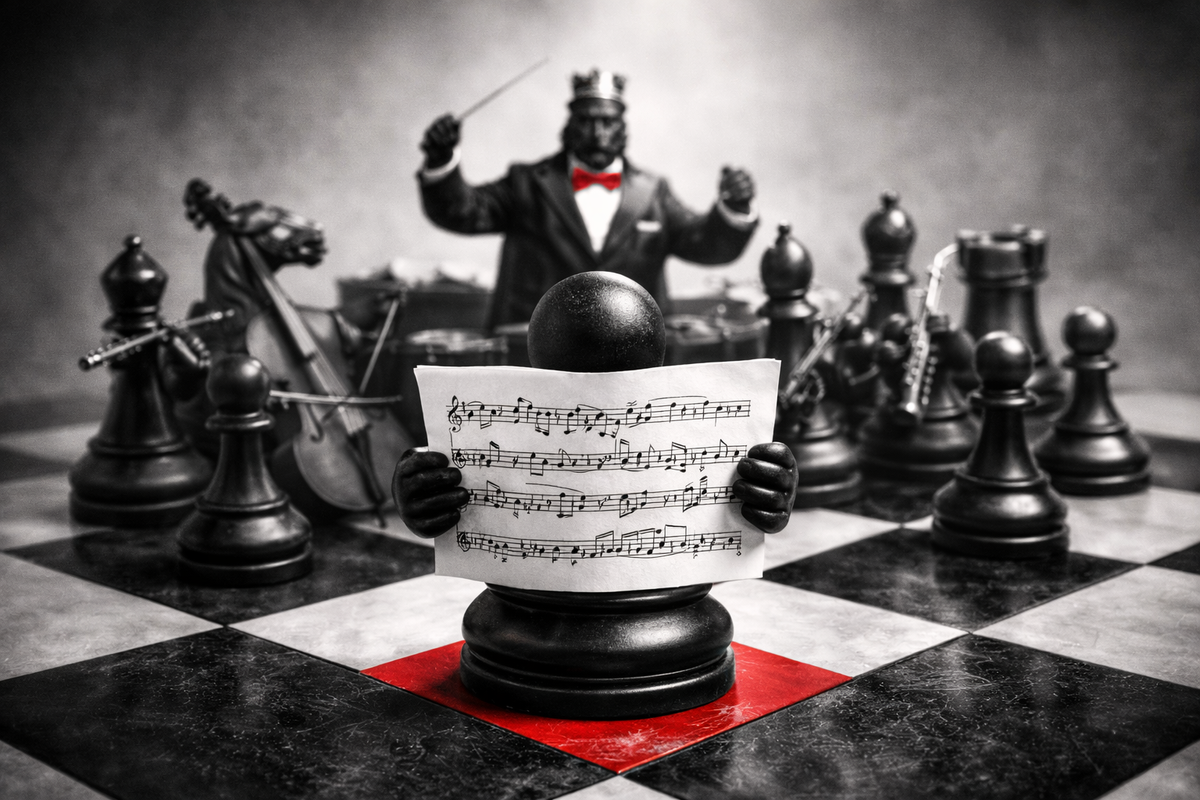
Each musician has their own part of the score. They must know when and how to enter, and how their playing fits into the entire ensemble. They listen to the rest of the orchestra and constantly adjust, in volume, tempo, and rhythm. And then there is the conductor, who leads the tempo, shapes the dynamics, highlights key moments, and connects all the instruments into a single whole.
It is the same in a team. A leader functions much like a conductor, but team members must also listen to one another, communicate, and share information. If someone keeps their “note” to themselves, the team loses its harmony. If someone ignores others or withholds information, the entire symphony becomes dissonant.
An orchestra rehearses for weeks to sound flawless. Trust among the musicians is essential, they know that everyone will contribute at the right moment. In teams, the same principle applies knowledge sharing, collaboration, and transparency are key.
Just as violins carry the melody and cellos add depth, every instrument has its role. The same is true in a team: everyone has their own skills and ideas. But without coordination and knowledge sharing, talent alone is not enough.
In one team I worked with, there was “one wrong note.” A person with great experience and exceptional talent, yet someone who never understood the importance of transparency and sharing information. They viewed information as personal power, something that made them indispensable.
But the paradox is quite the opposite. By sharing information, we do not lose our knowledge, our skills, or our value. On the contrary, we build trust and strengthen the team.
When the behavior did not change even after several conversations, the person was eventually moved to a role where they no longer worked directly within the team. There, their professional skills could still shine, but without negatively affecting team dynamics.
An individual’s talent can be extraordinary, but without sharing information and coordination, a team will eventually start to sound out of tune.
And just like in an orchestra, when everyone plays only for themselves, the music stops being a symphony.
In the end, the strength of a team is not measured by individual brilliance, but by how well its members listen, trust, and play in harmony.
Ask yourself: What note are you playing in your team’s symphony?
"None of us is as smart as all of us.” Ken Blanchard
#LeadershipThroughMusic #PlayYourNote #TeamSymphony #WorkplaceWisdom #Inspiration #GrowthMindset #Teamwork #Collaboration #OrganizationalCulture #TeamDynamics